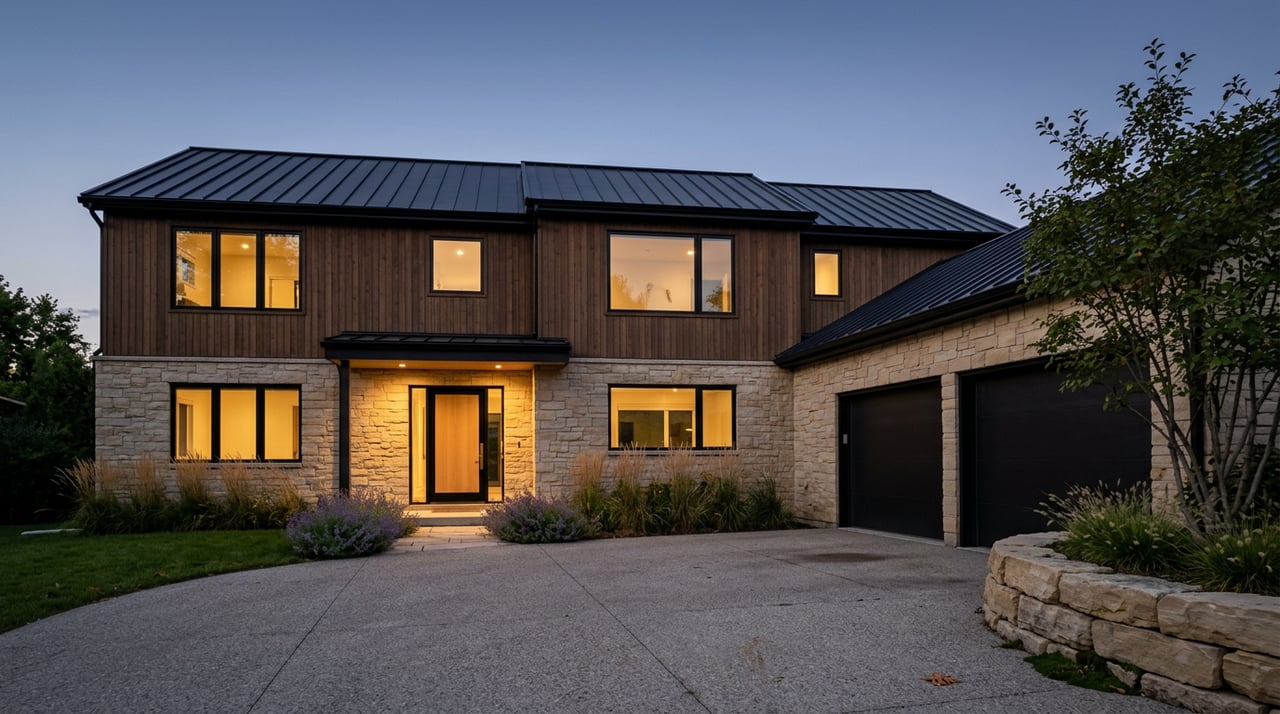
On August 18, 2026, the Loveland City Council voted unanimously to add a small 1900s-era home at 438 East 7th Street to the city's Historic Register. It became the 78th property on that list since the program started in 2002, one more building the city has decided is worth protecting for what it represents above ground: the craftsman lines, the original trim, the connection to an entrepreneur named Charley Rose who once ran a drugstore downtown.
Nobody at that council meeting was talking about the sewer line.
That's the gap this piece is about. A home's age in Loveland tells you almost nothing about whether an inspection will turn up a problem. It tells you a great deal about which problem. A 1905 bungalow near West 4th Street and a two-year-old build in Centerra will both generate an inspection report with findings on it. The findings just live in different systems, cost different amounts to resolve, and carry different odds of being visible before you own the house.
What's Underground on West 4th Street
The Downtown Loveland Historic District, listed on the National Register of Historic Places in 2015, covers 45 contributing buildings along 4th Street between Railroad Avenue and Jefferson Avenue. A few blocks over, the West 4th Street Historic District is a run of houses nearly all built by the same contractor, William W. Green, who put up roughly 150 homes across Loveland in the early 1900s and 1920s. The Lightner-Reed House at 813 West 4th went up in 1923. The Fansler House on West 5th dates to 1905. These are documented, individually nameable structures, and buyers who tour them are usually looking at the porch, the dormer windows, the woodwork.
What a local inspector actually finds in these blocks, and in the older stock ringing Lake Loveland, runs closer to aging electrical panels, original galvanized or polybutylene plumbing, and renovations layered on top of each other over decades at varying levels of quality. None of that shows up on a walkthrough. It shows up on a sewer scope, and the material matters as much as the age.
Homes built before the 1950s in this part of town often run on clay tile sewer lines, and clay tile is exactly as vulnerable as it sounds: tree roots, drawn to the water and nutrients inside the pipe, work their way through the joints until the line clogs or collapses. Loveland's mature, established-neighborhood trees are named as the leading driver of this kind of intrusion. Homes from the postwar boom, roughly the 1950s through the 1970s, sometimes carry Orangeburg pipe instead, a tar-paper product used when metal was scarce. Orangeburg doesn't crack so much as deform, and once an inspector finds it on a scope, the standard advice isn't repair, it's replacement. Cast iron, common in the decades after that, corrodes from the inside out, and homes 40 years or older commonly show meaningful deterioration by the time anyone points a camera down the line.
What a $120 Camera Can Save You From
A video sewer scope in this area runs about $120. That single inspection is what separates a buyer who knows exactly what they're inheriting from one who finds out during their first heavy rain. The math on the other side of that gap is not small: undetected sewer line failure typically runs an average of about $7,500 to repair, and can range from $5,000 to more than $25,000 once excavation is involved. Homeowners are responsible for maintaining the line from the house to the point it connects with the municipal main, which means this isn't a city problem waiting to be fixed for you. It's yours the day you close.
Radon adds a second, less visible line item to the older-home conversation. Larimer County sits in a region where roughly half of all homes test at or above the EPA's radon action level. That's not a downtown-specific issue, but it's one more test that belongs on the list for a house whose foundation predates modern radon-resistant construction techniques, and one more line a seller in an older neighborhood should expect a buyer to negotiate.
Centerra's Homes Have Their Own Version of This Risk
It would be easy to conclude that new construction sidesteps all of this, and buyers shopping newer subdivisions near Centerra and The Lakes at Centerra often assume exactly that. The inspector who spends the most time in both parts of town doesn't agree. New construction near Centerra and east Loveland is not exempt from problems, and workmanship shortcuts turn up in homes less than two years old with some regularity. As one local inspector puts it plainly, "building to code is a minimum standard," not a guarantee of quality.
The friction in newer subdivisions tends to be procedural rather than material. HOA rental restrictions in Centerra and comparable newer communities can cap non-owner occupancy, and that cap doesn't always surface until after a buyer has already written an offer, which is a particularly rough discovery for anyone planning to lease the property. Homes from the 1990s, meanwhile, sit in their own middle bracket: not old enough for clay tile or Orangeburg, but old enough that roof age and hail damage from decades of Front Range storms are common items that stall an inspection in its tracks.
Here's how that breaks down by era:
| Era & example areas | What commonly surfaces | What it typically means |
|---|---|---|
| Pre-1940s, Downtown & West 4th Street Historic Districts | Clay tile sewer lines vulnerable at the joints, original electrical panels, layered past renovations | A scope catches root intrusion before it becomes a backup; budget for panel upgrades separately |
| 1950s-1970s, near-downtown and Lake Loveland blocks | Orangeburg tar-paper sewer pipe, original galvanized plumbing | Orangeburg found on a scope is usually a straight replacement, not a patch |
| 1980s-1990s, established citywide subdivisions | Cast iron corrosion, aging roofs at or past hail-replacement age | Roof age becomes a standard negotiated repair item |
| New construction, Centerra & The Lakes at Centerra | Workmanship shortcuts under two years old, HOA rental restrictions | The risk is procedural and contractual, not material, but just as real at the negotiating table |
Before You Waive the Inspection Contingency
The specific test changes by era, but the discipline doesn't. A buyer or seller working through an older block should be asking for a video sewer scope before anything else, confirming the age and type of the electrical panel, and budgeting for a radon test given how common elevated readings are countywide. A buyer or seller in a newer Centerra-area build should be reading the HOA's occupancy and rental language line by line, and treating "new" as a reason to inspect thoroughly rather than a reason to skip it.
Loveland's contract-to-close timeline typically runs 30 to 45 days once financing contingencies and inspections are factored in, which doesn't leave much room to discover a sewer surprise after the fact. Ordering the right test early, for the right era of home, is the difference between a clean close and a renegotiation in week three.
The Ceremony Was Never About the Pipes
The council that approved 438 East 7th Street was voting on architectural and social significance, the kind of history that earns a plaque. What it protects has nothing to do with what a buyer or seller needs to verify before money changes hands. The house next door to any Historic Register property, or the house two years old in a Centerra cul-de-sac, still needs its own answer to the same question: what does this particular era of construction typically hide, and has anyone actually looked?
A Few Direct Questions
Does a home need a sewer scope if the seller already had one done recently? A scope reflects the condition of the line at the time it was run, and root growth or joint separation can progress between inspections, so a buyer purchasing an older home is still better served by a current scope tied to their own closing timeline rather than relying on a seller's older report.
Is new construction ever exempt from a full inspection? No. Workmanship issues have turned up in Centerra-area homes under two years old, and skipping a full inspection on a new build trades a known cost now for an unknown one later.
What's the single most overlooked cost in an older Loveland neighborhood? Sewer line condition, given both the frequency of clay tile and Orangeburg pipe in pre-1980s construction and the fact that repair costs land squarely on the homeowner once the sale closes.
If you're weighing a purchase in Loveland's historic core or a new build near Centerra, and you want a clear read on what to test, negotiate, or budget for before you write an offer, Kayla Hickcox offers a free consultation to walk through exactly that.
This article is general information, not legal, tax or financial advice. Consult a qualified professional about your situation.